
The Hidden Menace in Your Holiday Glass: Alcohol and Cancer Risk
Why This Conversation Matters Now
The holidays are here! Many tables are filled with festive food, laughter, and clinking glasses. But behind the cheer lies a silent threat and few talk about alcohol’s proven link to cancer. From Thanksgiving through New Year’s, alcohol consumption spikes dramatically. Studies show Americans drink nearly twice as much during the holidays compared to other times of the year. Social pressure, emotional stress, and cultural norms make overindulgence feel almost inevitable. But every extra pour carries a cost that can linger long after the decorations are packed away.
(https://www.cbsnews.com/news/holidays-drinking-alcohol-health/) (https://healtreatmentcenters.com/addiction/dangers-of-holiday-drinking/)
Alcohol as a Carcinogen
Alcohol isn’t just empty calories. It’s a chemical risk factor. When you drink, your body metabolizes ethanol into acetaldehyde, a toxic compound that damages DNA and interferes with cell repair. This process sets the stage for cancer development. While most people know about the dangers of smoking, many remain unaware that alcohol is classified as a Group 1 carcinogen, the same category as tobacco and asbestos.
(https://www.who.int/docs/librariesprovider2/default-document-library/alcohol-and-cancer-factsheet-eng.pdf)
(https://ascopost.com/issues/august-25-2025/alcohol-associated-cancer-death-rates-are-climbing/)
Types of Cancer Linked to Alcohol
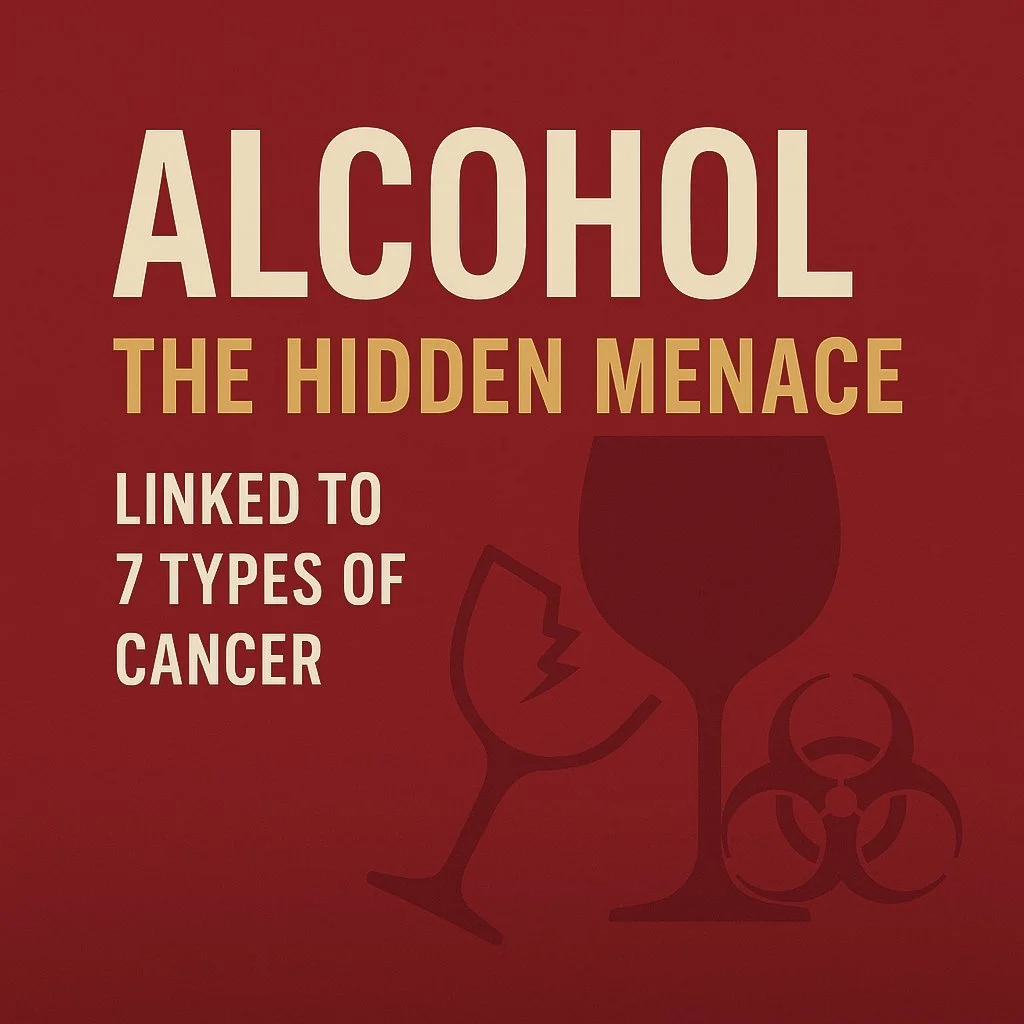
The evidence is clear: alcohol increases the risk of at least seven types of cancer, including: Breast, Liver, Colorectal, Esophagus, Mouth, Throat, and Larynx. And here’s the kicker: there is no safe level of alcohol for cancer prevention. Even small amounts raise your risk.
(https://www.cdc.gov/cancer/risk-factors/alcohol.html)
(https://www.who.int/docs/librariesprovider2/default-document-library/alcohol-and-cancer-factsheet-eng.pdf)
The Awareness Gap
Despite decades of research, awareness remains shockingly low. A recent survey found that over half of Americans (52.9%) don’t know alcohol raises cancer risk—and regular drinkers are the least informed. Misconceptions persist, fueled by marketing and cultural traditions that frame alcohol as harmless fun.
(https://www.sciencedaily.com/releases/2025/11/251105050722.htm)
(https://www.technologynetworks.com/cancer-research/news/more-than-half-of-american-adults-underestimate-the-link-between-alcohol-and-cancer-406397)
Rising Impact
The numbers tell a sobering story: In the U.S., alcohol-related cancer deaths doubled in 30 years, from about 11,896 in 1990 to over 23,000 in 2021. Globally, alcohol caused 741,000 new cancer cases in 2020. This isn’t a fringe issue. It’s a public health crisis hiding in plain sight.
(https://abcnews.go.com/US/cancer-deaths-tied-alcohol-rising-fast-study-finds/story?id=122087654)
Holiday Season Risks
Beyond long-term cancer risk, binge drinking during the holidays brings immediate dangers: accidents, alcohol poisoning, and impaired judgment. Emotional triggers like loneliness or stress can amplify consumption, making the season especially risky for vulnerable individuals. Emotional triggers like loneliness and stress amplify consumption.
(https://www.cancerhealth.com/article/risks-excessive-drinking-holiday-season-new-years)(https://www.niaaa.nih.gov/about-niaaa/directors-page/niaaa-directors-blog/holiday-drinking-and-your-health)
Practical Tips for Readers
Know your limits: Follow guidelines: no more than 2 drinks/day for men, 1 for women.
Offer alternatives: Mocktails, sparkling water, festive non-alcoholic options.
Plan ahead: Eat before drinking, set a drink limit, arrange safe transport.
Spread awareness: Share facts: alcohol is the third most preventable cause of cancer after tobacco and obesity.
(https://www.sciencealert.com/these-are-the-key-takeaways-in-the-new-us-alcohol-cancer-guidelines)
(https://www.cancer.gov/about-cancer/causes-prevention/risk/alcohol/alcohol-fact-sheet)